23 Jun 2026
Experience design for the beautiful game
Written by Lauren DyerClient Growth Director
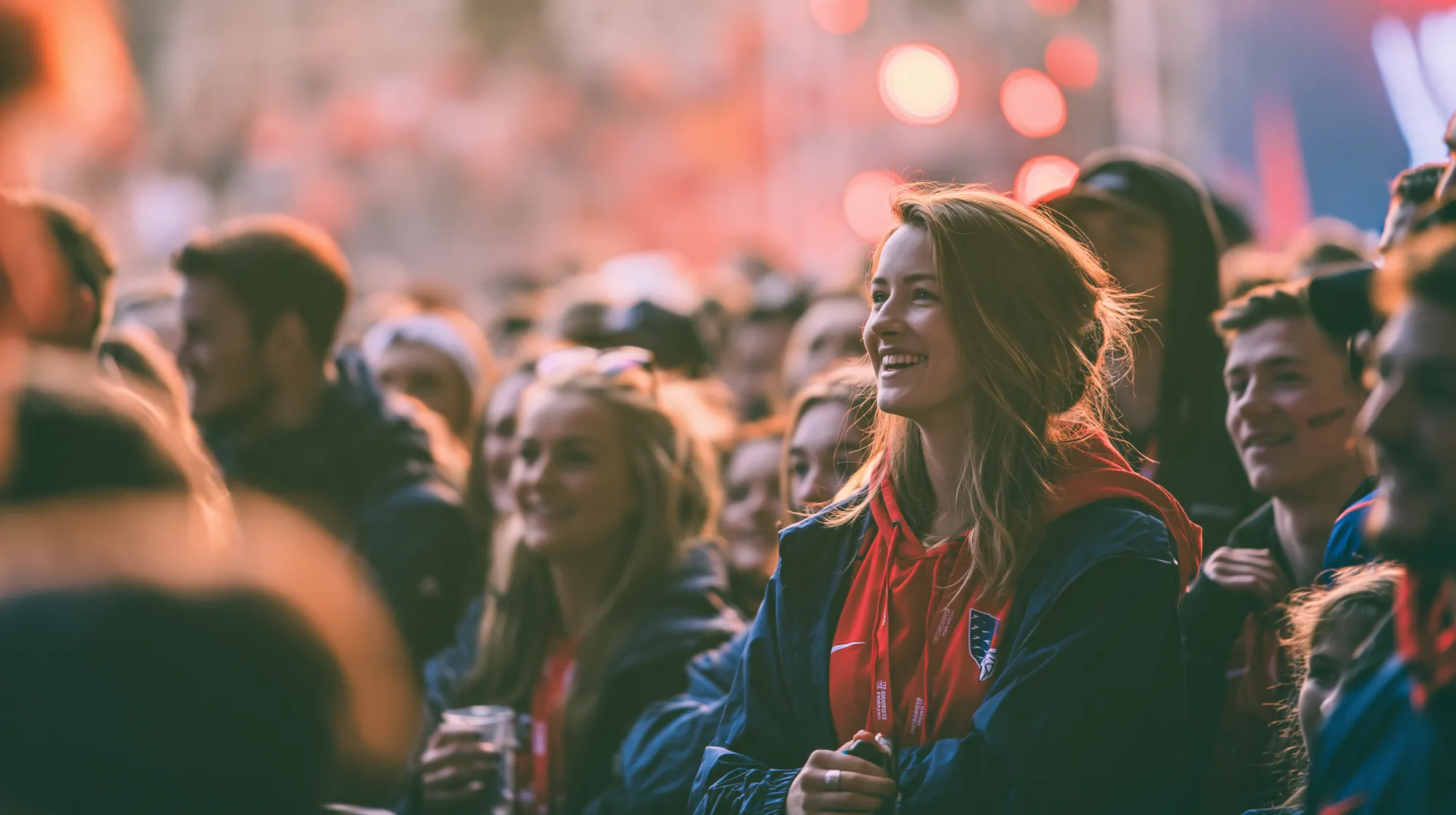
Tonight, England take on Ghana in Boston. This is where culture, community and competition collide, taking millions of fans on an emotional rollercoaster from their vantage point in the pub, fan parks, hospitality venues or the living room. That matters because the future of sport is not being shaped solely inside the stadium. It’s being shaped in the spaces around it.
The 2026 FIFA World Cup is the largest sporting event ever staged, but scale shouldn’t be the only focal point for the experience industry to consider.
For brands, destinations and venue operators, this presents a significant opportunity. The question is no longer how to attract attention during a sporting moment; instead let’s ask how we create experiences that make people feel part of it, especially when they won’t set foot in a host venue. This is where the most interesting experience design work is happening.
The distinction is important because the most memorable moments in sport aren’t just about the goals or the trophies. They are the shared emotions that surround them, and while these moments cannot be manufactured, they can be designed for.
The model is changing
For years, fan activations have largely followed a familiar formula. A big screen with speakers, which is basically a broadcast model with tables and chairs. It hasn’t fundamentally changed in twenty years, so what’s interesting about this World Cup is that several operators are breaking from it.
TOCA Social’s concept of interactive football gameplay alongside live match viewing works because it recognises that fans want to engage with an entire occasion, not just ninety minutes of sport. The match becomes part of a broader social experience rather than the sole focus of it.
Elsewhere, the Parc de la Villette LEGO Fan Zone in Paris is asking a different but equally important question: who have we been leaving out? Free entry, no alcohol, 1,800m² of hands-on making alongside live screenings. Families, children and people who don’t wish to drink are all welcome. That’s belonging design and it shouldn’t be as rare as it is.
The most successful activations understand that people arrive early, stay late, move around, socialise, celebrate and create their own rituals. Designing for those moments creates deeper engagement than simply providing somewhere to watch the game.
The big shift beyond football
Live sport, not just football, is losing the attention game and it’s quickly catching up to that fact. Audiences increasingly expect experiences that feel personal, social and participatory. They want to contribute to a moment, not simply consume it. The brands that understand this are moving beyond visibility and towards creating environments that encourage interaction, connection and shared memory.
Now that requires planning
Too often, experiential activity is approached as a tactical layer added close to an event. The strongest activations are designed much earlier, with a clear understanding of how people will move through a space, interact with one another and form emotional connections with the occasion.
The physical environment matters. The programming matters. The role of staff matters. Thinking about every touchpoint carefully is what contributes to how people remember the experience. It makes the difference as to whether they leave feeling connected to something larger than themselves, or not.
Achieve it though, and you’re in the territory of spatial storytelling.
So perhaps the design opportunity in front of sports right now is to stop competing on content and start competing on belonging. That means spatial design that treats the fan zone, the pub or the secondary city viewing event as a first-class creative brief that asks, “How can we create the conditions for belonging?”, not as an afterthought to the match but as an integral part of the whole picture.
For us, that is the real story of this World Cup. Not how many people are watching, but how many people feel connected.
Because when the tournament ends, the scores will be forgotten by most. The feeling of being part of something bigger is what remains. And that is where experience design has its greatest role to play.
Stay in the loop
Stories from the studio.
[Sign-up opens soon]
Work with us
Have a brand, a destination or a development that needs a story?